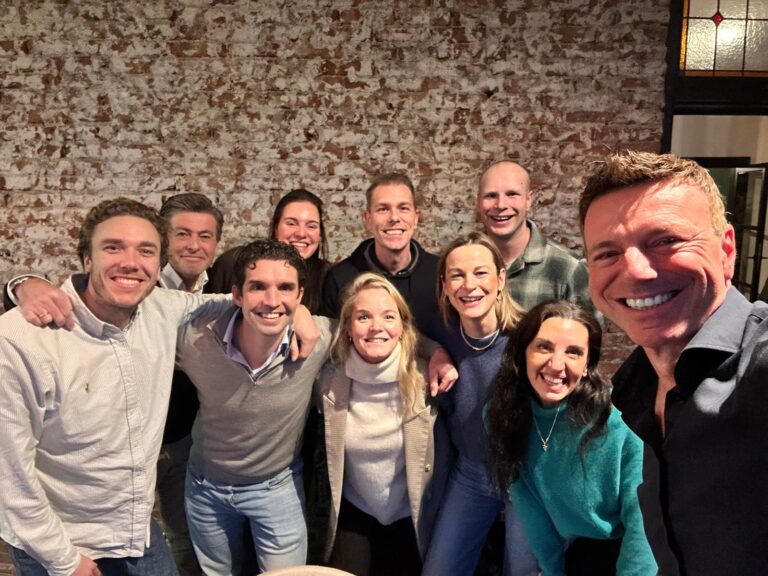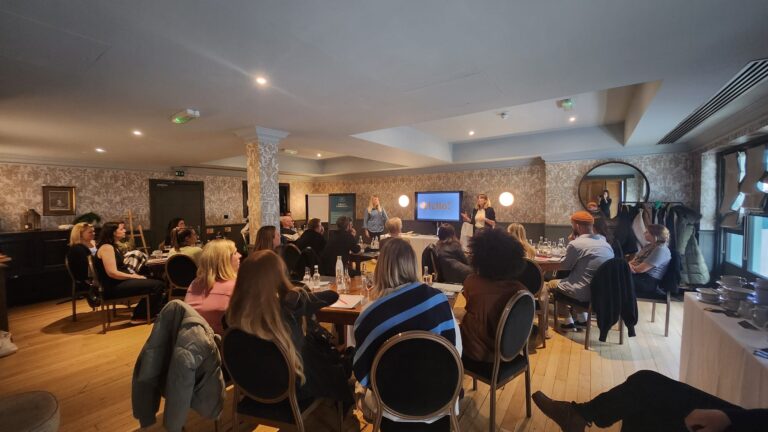

The Benelux leadership team wanted to strengthen how they communicate as leaders, particularly when presenting to the wider business.
This wasn’t about learning to present. They were already strong communicators. The work was about making sure messages landed with more clarity, consistency and impact, while staying true to the culture and behaviours the team had built together.
Practical, challenging and useful. Not traditional presentation training.

Experienced leaders from across the business, all presenting regularly as part of their roles, many in English as a second language.
They wanted to tighten and align the messages they were landing as a leadership team. To turn complex thinking into clear, compelling stories. To test how both message and delivery felt with peers, not just in theory. To refine presence without losing authenticity. And to handle challenge and differing viewpoints in the room, with confidence.
The focus was quality and consistency. Strengthening what was already strong, together rather than in isolation.
A three-part experience that brought together speaker training, leadership development and culture work. Presenting was treated as a leadership behaviour, not a performance skill.
Peer feedback and reflection sat at the centre of the whole thing. Leaders weren’t just practising in front of a facilitator. They were observing, challenging and feeding back to each other on the clarity of the message, how effectively stories brought behaviours to life, how presence supported or undermined the point, and how the message felt in the room rather than just how it sounded. That dynamic created depth and trust faster than any exercise could.
A live virtual session to establish a common language before the room came together. Individual communication style and impact. Listening habits and where judgement creeps in. Simple frameworks for clarity, storytelling and handling challenge. Light pre-thinking, not over-preparation.
Practical and feedback-led throughout.
Leaders worked on introducing themselves through impact rather than job title. Shaping clear leadership messages using storytelling frameworks. Connecting culture and behaviours to real, lived experiences. Giving and receiving honest peer feedback. Practising panel discussions and handling pushback in real time.
The room became a place where people challenged each other thoughtfully, tested ideas out loud, and refined content and delivery together.
Each person prepared and delivered a short leadership message grounded in a behaviour they personally connected with. Through multiple rounds of practice and feedback, leaders stripped back over-complication, refined their core message, and adjusted delivery to better match how they naturally communicate.
By the final round, the talks were clear, confident and grounded. The connection in the room was visible.
By the end of the programme, the team communicated with more clarity and confidence. Messages landed more consistently. Challenge was handled without defensiveness. People listened to each other more carefully. Feedback improved both message and delivery.
The biggest shift was this: leaders left with a shared understanding of how the quality of their communication shapes culture, trust and credibility. Not as a concept. As something they had experienced and practised together.
This wasn’t about turning leaders into performers.
It was about creating space to say less and say it better. To clarify thinking through storytelling. To pressure-test messages with people who would tell the truth. And to communicate in a way that actually reflects the culture they are trying to build.
Speaker training met leadership development. Culture stopped being theoretical.